
The Official Randolph News Trail
The Randolph County CivicAlerts archive works as the official stand-in for a multi-day log. A Sheriff News Flash entry may cover a major arrest. It may also cover a warrant operation, a drug seizure, or a multi-agency investigation. Items can name the unit, the alleged offenses, bond, and transport to the Randolph County Detention Center. A first appearance may appear there too. Posting is event-driven. The county promises no complete weekly booking list.
The county's own alerts page shows how dated and selective these announcements are.
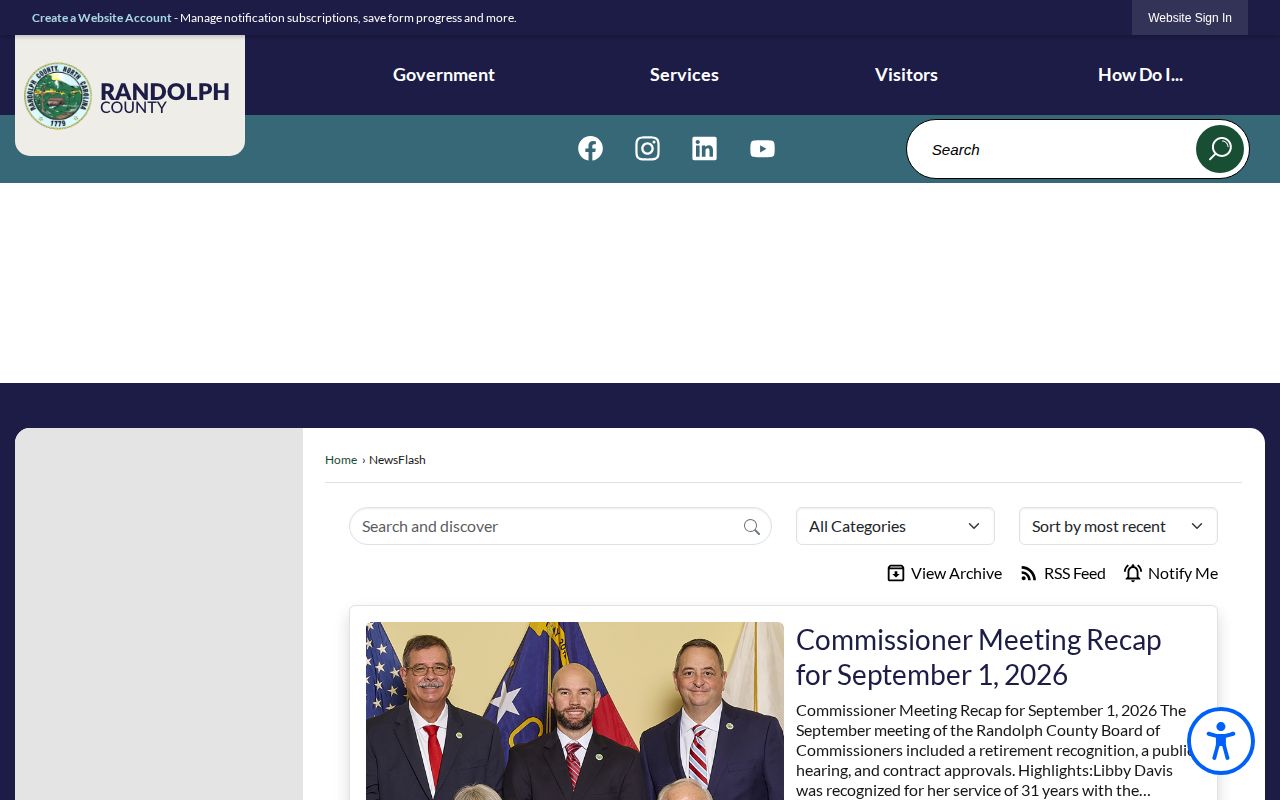
Check the date and source on every item; an absence from this archive never proves no arrest happened.
How to Read the Randolph Blotter
Build a reliable multi-day view by separating custody, publicity, and case outcome.
- Set the start and end dates you need.
- Review CivicAlerts for official selected announcements.
- Check the county date-sorted roster for people still confined.
- Compare name, date, arresting agency, charges, and court reference.
- Read local coverage for context, while noting its publication date and attributed source.
- Ask RCSO Records for older material and use the Clerk for disposition.
For a quick current-custody check, the 24 Hour Arrests page is the better route. This log instead shows how several days of records and reports fit together.
What an Arrest-Log Entry Shows
Fields differ because an official release, roster record, and newspaper story serve different purposes.
| Element | How to interpret it |
|---|---|
| Publication date | When the notice appeared, not always when the arrest occurred |
| Agency | RCSO, a city police department, or another participating unit |
| Charge | Charge language at that stage, not a conviction |
| Bond or appearance | Time-sensitive terms or a scheduled proceeding |
| Custody location | Where the person was taken at the stated time |
| Photo | Optional agency or editorial image, never proof of guilt |
Bond changes, release, transfer, or dismissal rarely get added to the original arrest story.
Weekend and Holiday Reporting Gaps
The county follows no fixed weekend or holiday posting pattern. A roster can update automatically. A press release, by contrast, waits on staff or a newsroom cycle. A Monday cluster may therefore reflect several days of events, publication timing, or both. Treat it as timing, not a crime surge.
Two clocks matter. Track the event date and the publication date separately, and never swap one for the other.
Use the roster and detention line for present custody. Use North Carolina courts for case outcome. "Not in the blotter" is not "not arrested," and an old story does not prove someone is still confined.
Randolph’s Local News Blotter Layer
Randolph Hub publishes selected county and Asheboro crime stories. It often credits details or images to RCSO or APD. The Randolph Record's crime tag runs the same way, posting episodes rather than a feed. Archdale-Trinity readers get recurring Sheriff's Report material through the High Point Enterprise. The Courier-Tribune covers Asheboro and county matters. These outlets add narrative and later court context. None serves as a complete jail feed.
The Randolph Hub news section shows editorial coverage rather than a custody database.
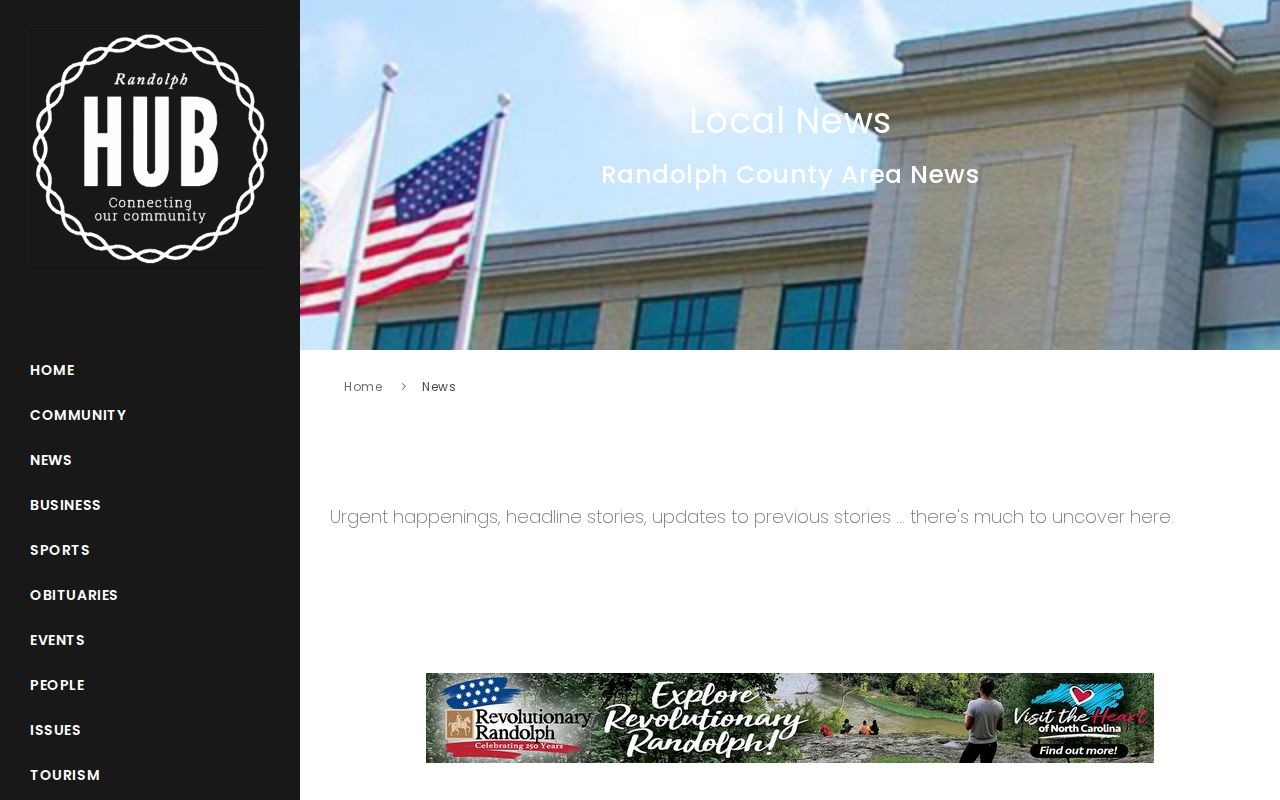
Confirm any named report with the sheriff, police department, jail, or court cited in the story.
Unofficial Archives and Their Limits
Private county pages may offer 30-day, monthly, or deeper date navigation. Entries can lag or go missing. They may also duplicate a person. Some linger after the official roster changes. Treat them as leads only. An old booking photo or listing proves nothing about current custody. The Mugshots.zone Randolph page shows this kind of month-by-month archive with unofficial context.
Use such a site only to locate a date, then confirm the event through an official source.
Archives Past the Online Window
The live roster is not an archive. For an older arrest report or booking record, start with RCSO Records at 336-318-6698. Give the person, the date, and the arresting agency. Include any booking or incident number, and the record type. Ask whether the record still sits with the sheriff. It may have moved into a case file, or it may have been disposed of under the state schedule.
North Carolina's sheriff retention schedule splits records into categories. It treats arrest-processing tracking, arrest reports, identification photographs, inmate-incarceration records, and weekly inmate lists as separate categories. No single retention period covers them all. The Clerk holds the court-side record. The State Archives can say whether a historical county transfer exists. A missing web page alone says nothing about lawful retention.
Enforcement Logs Are Not Booking Totals
A sheriff release may describe a warrant service, drug operation, or multi-agency investigation. Its arrest count belongs to that event alone. It does not equal the county's bookings for the week. An annual unit statistic cannot become a daily rate. A newspaper digest cannot either. Publication reflects news value, staffing, and agency communication as much as enforcement activity.
Use an announcement to establish what an agency said on a stated date. Use the roster for current county custody. Court records cover later action. Keeping those layers apart stops a handful of prominent cases from posing as a trend. It also stops a quiet newsroom stretch from passing as proof that no arrests occurred.
Matching a Report to the Right Person
A multi-day search can produce repeated names, updated stories, and records using arrest, offense, booking, and publication dates. Compare several identifiers: full name, age when supplied, city, arresting agency, incident or court reference, allegation, and event date. Do not use a photograph as the sole match. If a story attributes facts to RCSO or a city department, follow that attribution to the named source.
Charge text in an early release can change at the magistrate, prosecutor, or court stage. Describe it as an allegation and state which source carried it. The Randolph Clerk and North Carolina court system provide the continuing case trail. A news archive can preserve a first account without reflecting dismissal, reduction, plea, acquittal, or judgment.
Requesting a Dated Randolph Record
The right office to ask depends on which agency made the arrest in Randolph County. RCSO Records keeps sheriff material. City police departments hold their own incident and arrest reports. A tight request works best. Name the person, the date, the agency, and any reference number you have. Vague asks for everything about arrests move slowly.
Also confirm the record's current status before you submit the request. It may sit in retention, sealed, or transferred. It may also have been disposed of under schedule. Arrest reports, booking photographs, and weekly inmate lists each get different handling. The online roster is not the retention schedule. When material moved into a court case, the Clerk is the authoritative route for access.
Records tip. Ask the custodian for the record's current status before you rely on it.